Aphasia Treatment at Home to Restore Speech and Confidence
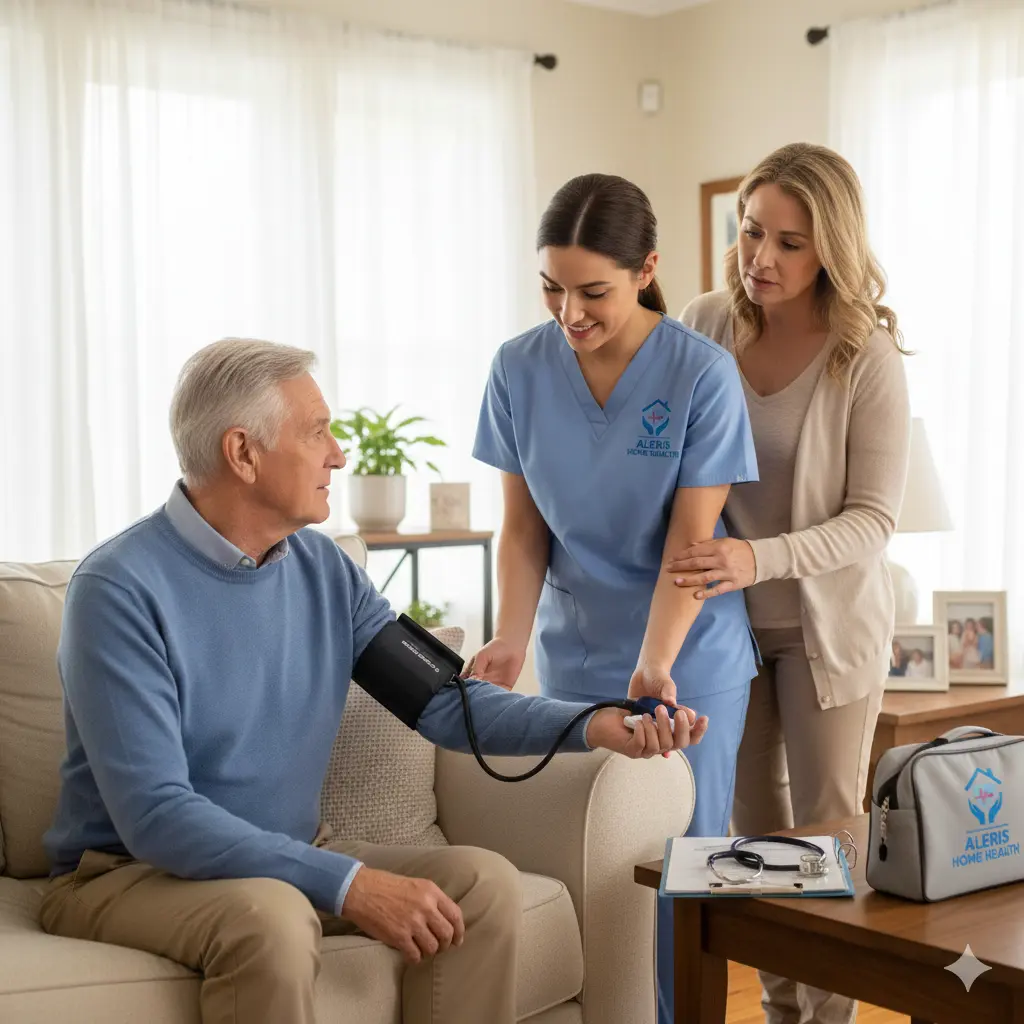
Aphasia treatment is a medically guided therapy program that helps patients regain speech, language, and communication skills after a stroke or brain injury. Aleris Home Health delivers hospital-level skilled nursing and speech therapy directly in your home, helping patients recover safely and confidently.
Quick Facts
- Specialized in-home aphasia treatment speech therapy after stroke or neurological injury
- Care delivered by licensed clinicians in the comfort of your home
- Fast Admission: We can start your care plan within 24–48 hours of referral
- Serving Sugar Land, Houston, Richmond, Katy, and Fort Bend County
Aphasia is a communication disorder that affects how a person speaks, understands language, reads, and writes. It most often appears suddenly after a stroke or head injury, but it can also develop gradually due to conditions such as brain tumors or progressive neurological diseases. The severity of aphasia depends on the location and extent of brain damage.
The primary goal of aphasia treatment is to address the underlying medical condition while restoring communication skills through structured speech and language therapy. Recovery is most successful when therapy begins early and involves family members, who play a critical role in supporting daily communication.
What Is Aphasia Treatment?
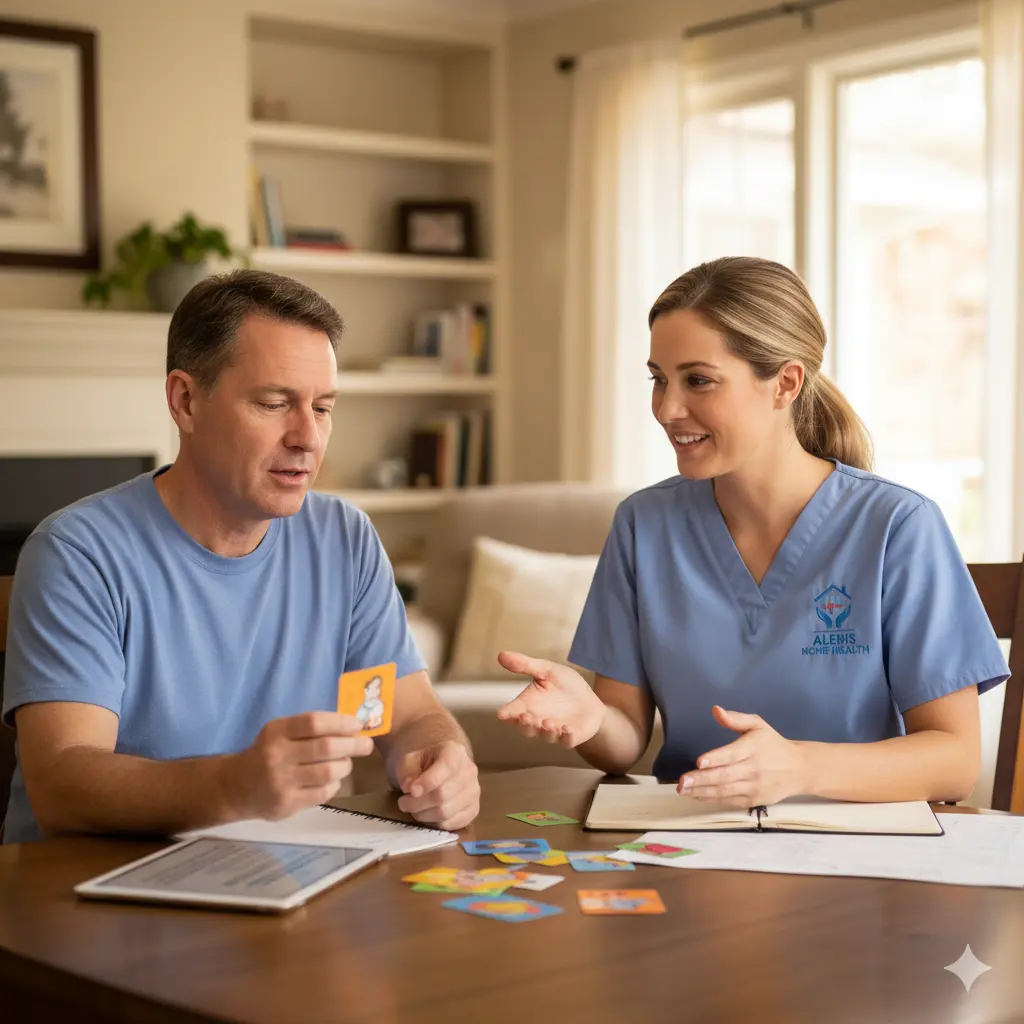
Treatment for aphasia focuses on improving a patient’s ability to communicate and function independently. Aphasia treatment techniques may include structured speech exercises, cognitive retraining, alternative communication strategies, and caregiver education. Aphasia treatment speech therapy helps patients relearn language skills, compensate for lost abilities, and rebuild confidence.
At Aleris Home Health, therapy is delivered in a familiar home environment, which often leads to better participation, reduced stress, and improved outcomes compared to outpatient settings.
Common Signs and Symptoms of Aphasia
- Difficulty forming complete or meaningful sentences
- Substituting incorrect words or sounds
- Trouble finding the right words during conversation
- Difficulty understanding spoken language
- Problems reading or writing clearly
What Causes Aphasia?
The most common cause of aphasia is a stroke, which disrupts blood flow to areas of the brain responsible for language. Other causes include traumatic brain injury, brain tumors, infections, and degenerative neurological conditions. Some individuals experience temporary aphasia due to migraines, seizures, or transient ischemic attacks (TIAs).
Complications of Aphasia
Aphasia can significantly affect quality of life. Difficulty expressing needs may lead to frustration, isolation, depression, and challenges with work and relationships. Many patients also experience mobility or memory issues alongside aphasia, making coordinated home-based care essential.
Treatment Options for Aphasia
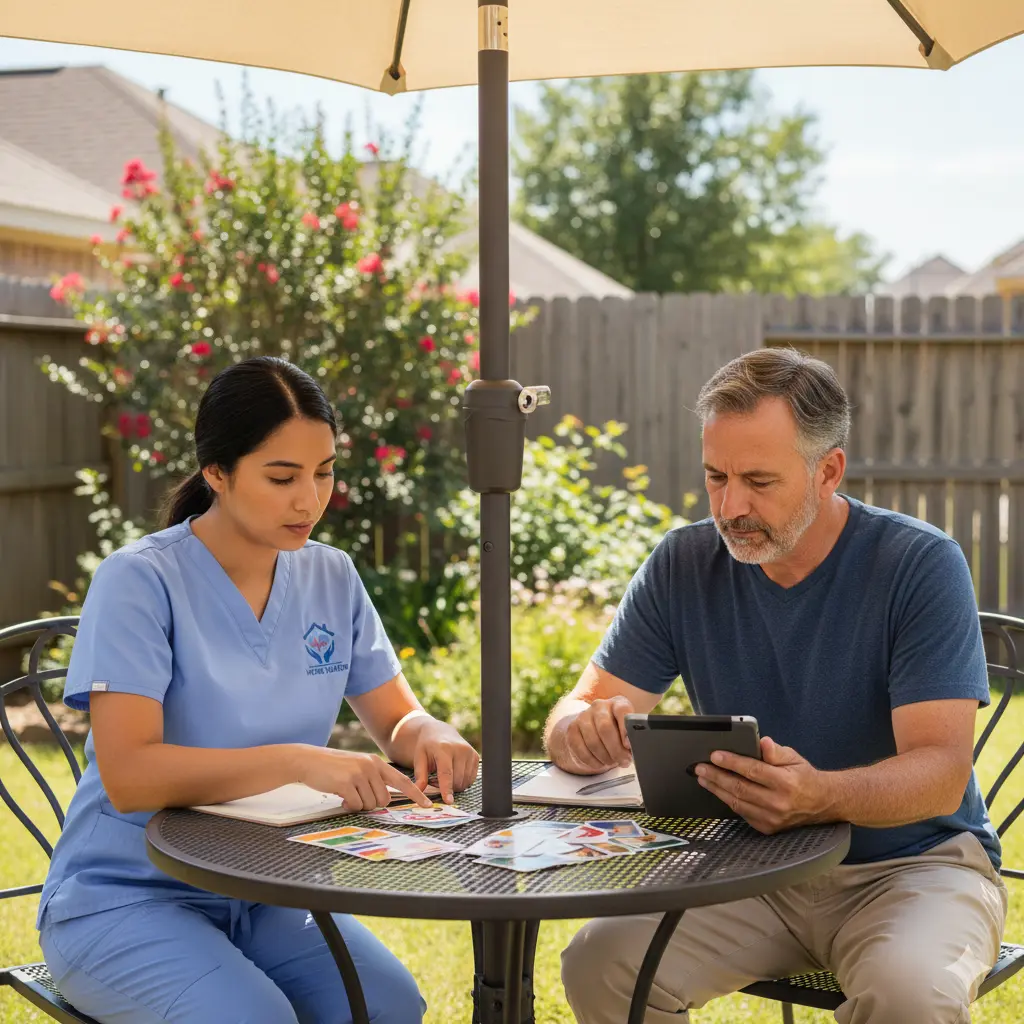
Speech and language therapy is the cornerstone of aphasia treatment. Therapy may include one-on-one sessions, group therapy, and computer-assisted programs. Research is ongoing into medications and noninvasive brain stimulation techniques, though these are still under study and used selectively.

How Aleris Starts Your Care
- Clinical Evaluation: A licensed speech-language pathologist begins with a comprehensive assessment of communication, cognition, and swallowing needs. This initial step helps determine the right speech therapy approach while also identifying whether supportive services for caregivers or mobility support may be needed.
- Personalized Plan of Care: We work closely with your physician to design a customized treatment plan focused on recovery goals. Depending on the patient’s condition, the plan may include speech therapy, caregiver education, and coordinated services such as In-Home Physiotherapy to support overall independence and safety.
- Ongoing Therapy & Progress Tracking: Therapy sessions are continuously adjusted as communication and functional abilities improve. Our clinicians collaborate with caregivers to reinforce progress between visits and integrate therapy techniques into daily routines at home.
The Aleris Recovery Experience
Scenario 1 – Recovery Focus:
A patient in Sugar Land recovering from an ischemic stroke was discharged from Methodist Sugar Land Hospital with difficulty speaking and understanding instructions. Within 48 hours, Aleris Home Health initiated aphasia treatment speech therapy at home. Over several weeks, the patient improved word retrieval and sentence formation, allowing meaningful conversations with family again.
Scenario 2 – Family Focus:
A family in Richmond struggled to communicate with a loved one after a stroke treated at Memorial Hermann. Aleris clinicians educated caregivers on treatment techniques for aphasia and communication strategies. This reduced frustration, improved medication compliance, and prevented hospital readmission.
Insurance & Eligibility
Medicare Part A typically covers aphasia treatment at home for eligible patients at 100%. Many private insurance plans are also accepted. Aleris Home Health verifies your benefits and handles authorization directly, so families can focus on recovery.
Learn more about Medicare-covered home health services
Frequently Asked Questions
How is aphasia treated after a stroke?
Through speech-language therapy focused on restoring and compensating for communication skills.
Can you recover from aphasia?
Many patients make significant improvements, especially with early and consistent therapy.
Do I need a doctor’s referral for aphasia treatment?
Yes. Home Health is a prescribed medical service. Aleris works directly with your doctor to get this approved quickly.
How long does it take to treat aphasia?
Recovery varies; therapy may last weeks to months depending on severity.
What are the first signs of aphasia?
Difficulty speaking, understanding language, or finding the right words.
Your recovery journey starts at home.
Contact Aleris Home Health today to schedule an evaluation within 24–48 hours.
Call: (281) 313-0087
Address: 140 Eldridge Rd, Suite H, Sugar Land, Texas 77478
Email: info@alerishomehealth.com
Start Care: Contact Page
Educational content only; follow your physician’s individualized plan of care. Call 911 for emergencies.
Find Us on Google Map
Author: Alan Jacob / Medical Writer. Primary service areas: Sugar Land, Houston, Spring, and surrounding communities.