

Why Choose Physical Therapy for Knee Pain in Houston?
Physical therapy for knee pain is one of the safest and most effective ways to reduce pain, improve movement, and prevent long-term joint damage. At Aleris Home Health, patients in Sugar Land, Houston, and surrounding areas can begin care within 24–48 hours—all in the comfort of home. Our licensed physical therapists create individualized plans to help patients walk, bend, climb stairs, and stay active with confidence.
Physical therapy for knee pain uses targeted exercises, hands-on techniques, and movement training to restore strength, improve mobility, and reduce inflammation.
What Is Physical Therapy for Knee Pain?
Physical therapy focuses on strengthening the muscles surrounding the knee, improving joint flexibility, enhancing balance, and correcting movement patterns. These treatments reduce pressure on the knee joint and help patients return to daily activities safely and comfortably.
Whether the pain is caused by injury, arthritis, surgery, or muscle imbalance, physical therapy provides structured, evidence-based steps for lasting improvement.
Causes of Knee Pain
Knee pain can affect people of all ages. Common causes include:
- Osteoarthritis – wear and tear that reduces cartilage cushioning.
- Ligament injuries – ACL, MCL, LCL tears from falls or twisting.
- Meniscus tears – cartilage damage from sudden pivots or aging.
- Overuse injuries – repetitive stress from work, sports, or lifting.
- Post-surgical stiffness – after knee replacement or arthroscopy.
- Weak muscles or imbalance – leading to poor alignment and pressure.
- Obesity or high-impact activities – increasing joint load.
According to the National Institute of Arthritis and Musculoskeletal and Skin Diseases, targeted physical rehabilitation is a proven method to improve knee function and reduce activity-related pain.
How Physical Therapy Reduces Knee Pain
Physical therapy reduces knee pain by addressing the underlying cause, not just the symptoms. Therapists use a combination of strengthening, stretching, manual therapy, and movement retraining to improve joint support and function.
1. Strengthening Weak Muscles
Weak quadriceps, hamstrings, and hip muscles force the knee to absorb more stress. Physical therapy restores muscle strength so the joint is properly supported.
2. Improving Flexibility
Tight muscles around the knee restrict motion and increase pain. Stretching improves range of motion and decreases joint pressure.
3. Reducing Swelling & Inflammation
Heat/ice therapy, soft tissue work, and controlled movement help reduce inflammation and improve circulation.
4. Rebuilding Joint Stability
Balance training and gait correction reduce the risk of falls and prevent further injuries.
5. Correcting Movement Patterns
Therapists teach safer techniques for walking, bending, lifting, and climbing stairs to protect the knee long-term.
Physical Therapy Exercises for Knee Pain
These exercises are commonly used during sessions:
- Quad sets – activate knee-supporting muscles.
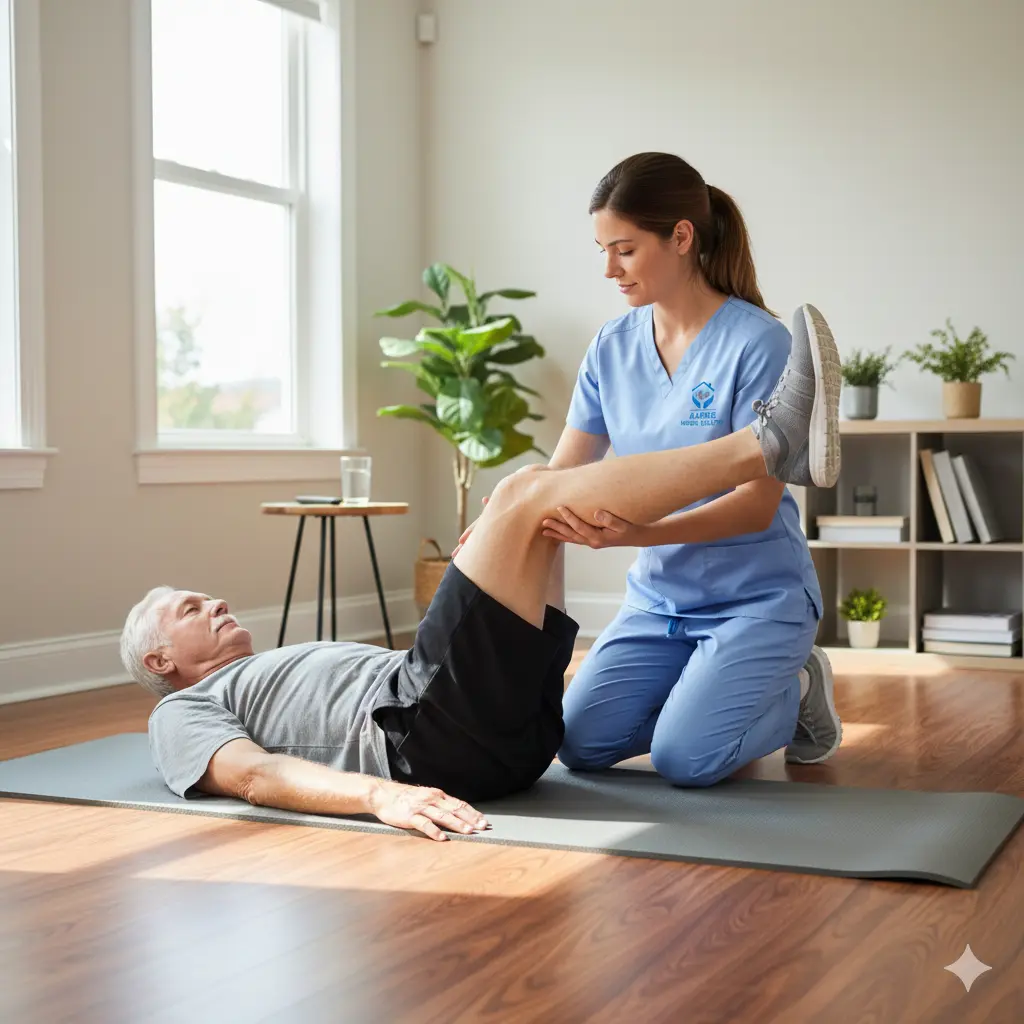
- Straight-leg raises – improve joint stability.
- Hamstring & calf stretching – reduce joint tension.
- Hip strengthening – essential for knee alignment.
- Balance and gait training – prevent falls and improve walking.
Our therapists select exercises based on the patient’s pain level, mobility, and medical history.
How Aleris Home Health Helps You Recover
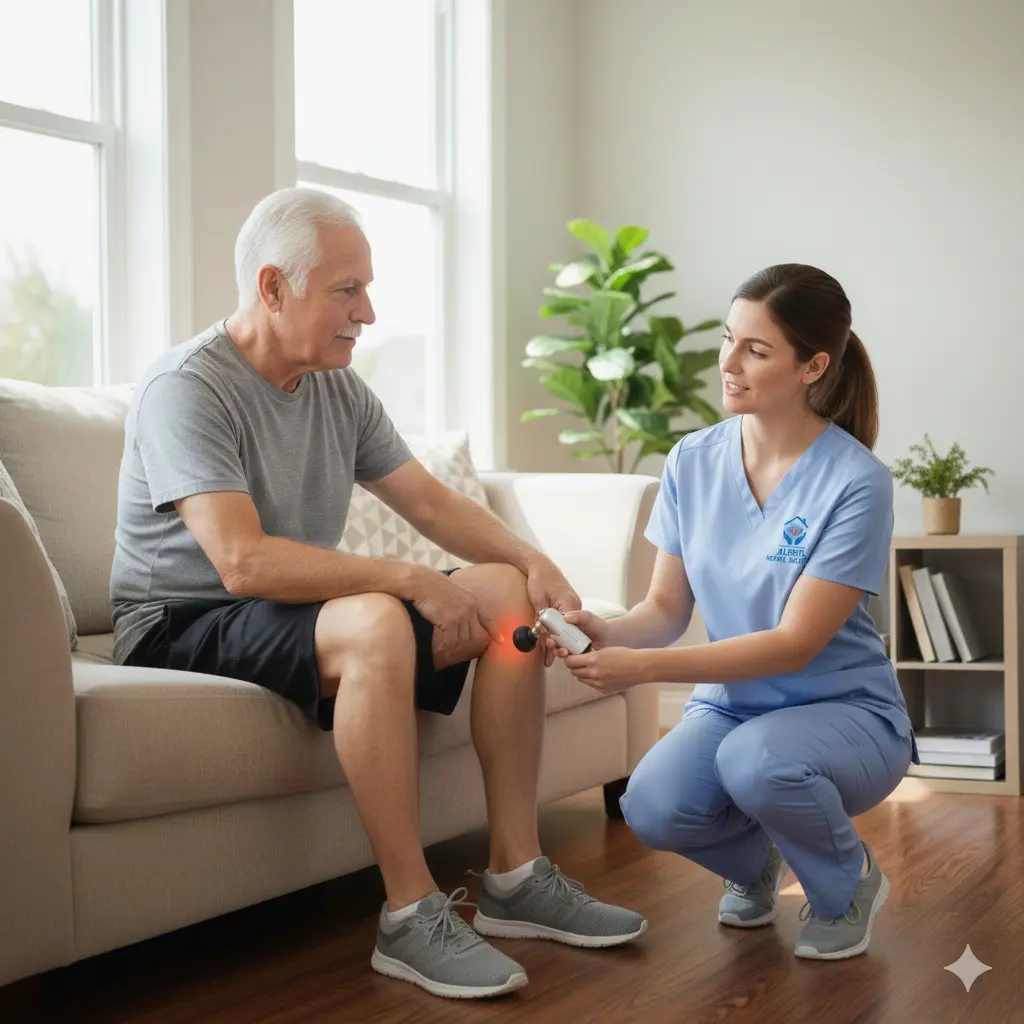
Aleris Home Health provides licensed, in-home physical therapy for knee pain across Sugar Land, Houston, and nearby communities. We bring clinic-level care directly to your home, reducing travel strain and offering a safer, more personalized experience.
What You Can Expect from Aleris
- Start in 24–48 hours after referral or request.
- Personalized treatment plans based on your exact needs.
- Hands-on therapy for pain relief and improved mobility.
- Gait, balance, and fall-prevention training.
- Home safety assessments to reduce risks.
- Caregiver training for support between sessions.
Mini Case Studies
Case Study 1: Post-Surgery Knee Stiffness (4 Weeks)
Before: A 70-year-old patient from Sugar Land had severe stiffness after knee replacement surgery and struggled to stand without assistance.
After: In four weeks, the patient improved bending from 45° to 95°, reduced swelling, and walked safely with a cane.
Case Study 2: Arthritis-Related Knee Pain (6 Weeks)
Before: A 68-year-old Houston resident experienced morning stiffness, difficulty climbing stairs, and chronic pain.
After: With consistent therapy, pain dropped by 50%, stair climbing improved, and mobility increased significantly.
Frequently Asked Questions
1. How long does physical therapy for knee pain take?
Most patients feel improvement in 1–2 weeks. Full recovery usually takes 4–12 weeks depending on the condition and severity.
2. Can physical therapy prevent knee surgery?
In many cases, yes. Strengthening and training can delay or prevent surgery for arthritis and overuse injuries.
3. Is in-home physical therapy as effective as clinic therapy?
Yes. Home therapy offers one-on-one care, real-time home assessment, and reduces travel pain.
4. What happens during the first therapy session?
The therapist checks your strength, balance, flexibility, pain triggers, and builds a personalized recovery plan.
5. Does insurance cover physical therapy?
Most insurance plans cover skilled physical therapy when medically necessary. Aleris can help verify your benefits.
Call Aleris Home Health Today
Get licensed physical therapy for knee pain in Sugar Land, Houston, and surrounding areas—right at home. Start feeling better within 24–48 hours.
Call: (281) 313-0087
Visit: 140 Eldridge Rd, Suite H, Sugar Land, Texas 77478
Email: info@alerishomehealth.com
Schedule your in-home therapy evaluation today
Educational content only; follow your clinician’s individualized plan; call 911 for emergencies.
Author: Alan Jacob / Medical Writer. Primary service areas: Sugar Land, Houston, Spring, and surrounding communities.